Quick answer
When critical equipment breaks down, first get a written diagnosis with a repair cost and lead time, then compare it with replacement and hire. Check whether machinery breakdown or business interruption insurance applies. To pay for the fix, businesses commonly use unsecured cash-flow funding sized on bank statements, or a property-secured loan when the amount is large or trading history is short. Fund the downtime too, not just the invoice.
Key points
- Downtime usually costs more than the repair — price both before choosing.
- Hire can protect revenue while you decide between repairing and replacing.
- Standard property policies often exclude breakdown; machinery breakdown cover is separate.
- Funding can be sized to the fix plus the hire, not just the invoice.
- Unsecured options
- Typically $5,000 to $500,000
- Property-secured funding
- $20,000 to $5,000,000
- Possible timing
- Same-day funding possible for smaller unsecured amounts
- Purpose
- Business purposes only
Not every business emergency comes with sirens. For a lot of owners the worst week of the year starts with a noise — a gearbox letting go, a compressor dying in a cool room, a truck that won’t start with a full load booked. The business is fine, the premises are fine, but the one thing that makes money has stopped.
Equipment breakdown is the most common crisis on this site, and the most fixable. The trick is to decide quickly and fund it properly. The “Equipment breakdown” option in our emergency action checklist turns this page into a tick-list.
The first 24 hours after a breakdown: what comes first?
- Make it safe. Isolate the machine, tag it out, and keep staff clear.
- Protect what’s at risk. Move refrigerated stock to another unit or a hired reefer, reroute deliveries, reschedule jobs.
- Get a diagnosis in writing — cause, parts needed, parts lead time, labour and total cost.
- Ring a hire company for a like-for-like unit and ask the daily and weekly rate.
- Tell the customers who’ll feel it, with a realistic new date.
- Check your policy schedule for a machinery breakdown section and business interruption cover.
Should you repair, replace or hire?
This is the decision that matters. Price each option over the same period, including lost revenue.
| Option | Upfront cost | Downtime | Watch for |
|---|---|---|---|
| Repair | Usually lowest | Depends on parts lead time | Repeat failures on an old machine |
| Replace (new) | Highest | Supplier lead time | Delivery dates quoted versus actual |
| Replace (used) | Medium | Often shortest | Condition, hours, warranty |
| Hire while deciding | Daily or weekly rate | Minimal | Hire costs adding up if the fix drags |
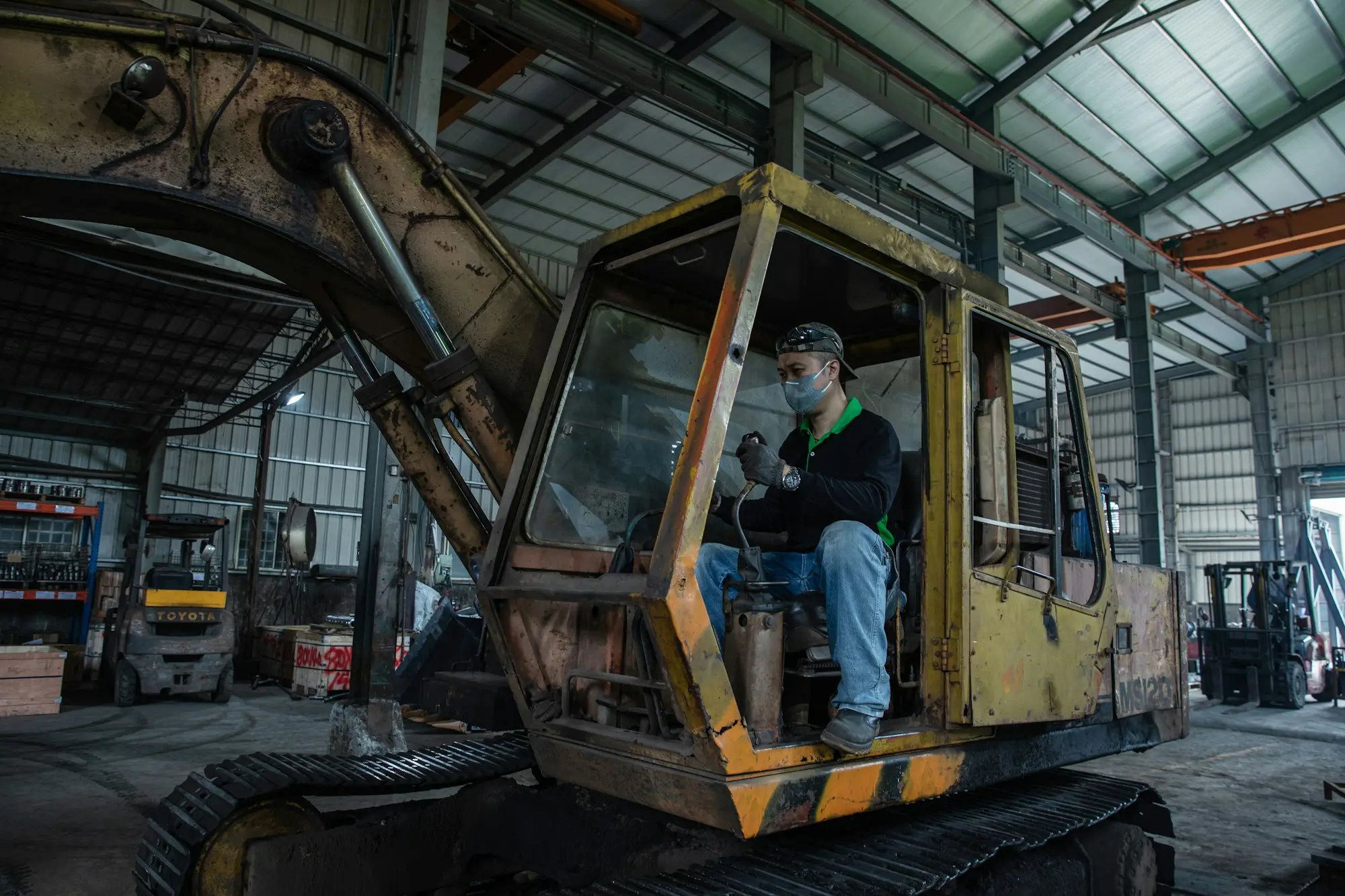
Illustrative example only: a civil contractor’s excavator needs a new hydraulic pump with a four-week wait. Hiring a replacement costs less than losing a month of contracted work, so the owner funds the repair and four weeks of hire together, rather than just the repair invoice.
Which jobs belong in the first week?
- Lock in the decision and the date the equipment will be working again.
- Lodge any insurance claim with the diagnosis attached.
- Update your cash forecast for the repair, hire and any lost revenue. The shutdown cash runway tool is a quick way to see how long you can carry reduced trade.
- Talk to your supplier or dealer about warranty, loan units or trade-in value.
- Think about the next one. If this machine is critical and ageing, now is a good time to plan its replacement rather than waiting for the next failure.
Who should you call?
| Contact | What for |
|---|---|
| Your mechanic, technician or dealer | Written diagnosis and quote |
| Hire company | Replacement unit and rates |
| Your insurer or broker | Machinery breakdown or interruption cover |
| Key customers | Revised delivery dates |
| Your accountant | Repair versus capital purchase treatment |
| A finance specialist | Funding the repair, replacement or hire |
How do businesses fund an equipment breakdown?
Most breakdowns are funded in one of two ways, and the right one depends on the amount, how quickly you need it and whether you have property to offer. If you’d like help choosing, someone on our team can walk through it with you — enquiring doesn’t touch your credit file.
- Unsecured or cash-flow funding — suits repairs, parts, hire, a replacement machine and the lost trading week, typically $5,000 to $500,000 sized on turnover and bank statements. Same-day funding is possible for smaller amounts. See unsecured emergency cash.
- Property-secured loan — suits larger amounts, businesses with patchy statements, or replacing several items at once. From $20,000 to $5,000,000 over residential or commercial property.
Some owners also use a dealer’s own finance for a brand-new machine. Whatever you choose, fund the whole problem — repair or replacement, hire and the lost days — rather than just the invoice. More on the options in equipment replacement funding.
Past credit problems or an ATO debt don’t automatically rule you out; they’re considered case by case.
What mistakes cost the most after a breakdown?
- Choosing on the invoice alone. The cheapest repair with the longest wait can be the most expensive option.
- Letting hire run on indefinitely. Set a decision date so hire doesn’t quietly become the replacement cost.
- Buying the wrong replacement in a hurry. A second-hand unit with unknown hours can put you back here in six months.
- Paying from the tax account. Using money set aside for BAS or PAYG only moves the emergency to next quarter.
- Forgetting to tell customers. A phone call with a new date keeps work that silence would lose.
What documents should you have ready?
- Written diagnosis and repair quote, or the replacement quote or invoice
- Hire quote if you’re hiring
- Business bank statements covering the last 6–12 months
- ABN or ACN, and ID
- Any insurance claim number and correspondence
- Details of property you could use as security, if relevant
Want to get the machine running again?
Every day the machine sits idle costs you. If you need to repair, replace or hire quickly, let’s look at the numbers together.
Looking at options carries no downside: we don’t check credit at the enquiry stage. We don’t farm out enquiries — one team holds your file from start to finish. The person who rings you back will have read what you wrote and will want the full story.
Please take a moment to get the amount, purpose, state and property details right; a well-filled form is the quickest route to a useful answer. See if you qualify.
Frequently asked questions
Does business insurance cover equipment breakdown?
Often not under a standard property or contents section, which is aimed at events like fire, storm and theft. Machinery breakdown cover is usually a separate section or policy, and business interruption cover may only respond if the breakdown is an insured event. Check your schedule.
Should I repair or replace broken equipment?
Compare the total cost of each option including downtime. A cheaper repair with a six-week parts wait can cost more than a replacement you can have next week. Also consider the machine's age, reliability history and resale value.
Can I get finance to repair equipment, not just buy it?
Yes. Repairs, parts and hire can be funded with unsecured cash-flow funding or a line of credit sized on your turnover, or with a property-secured loan for larger amounts.
How fast can breakdown funding be arranged?
It depends on the amount and security. Same-day funding is possible for smaller unsecured amounts where bank statements are ready, and property-secured amounts of $20k to $250k are possible same day.
What documents speed things up?
The repairer's written quote or the replacement invoice, six to twelve months of business bank statements, your ABN, and details of any property you could offer as security.